
Choosing the right trading account structure is one of the most critical decisions an active trader makes. TradeZero offers multiple account structures—primarily Cash, Margin, and Corporate accounts—across distinct legal entities depending on your legal jurisdiction. Understanding how these account types function regarding leverage, settlement rules, short selling, and minimum deposit requirements ensures you select the optimal setup for your capital, experience, and strategy.
What Are the TradeZero Account Types?
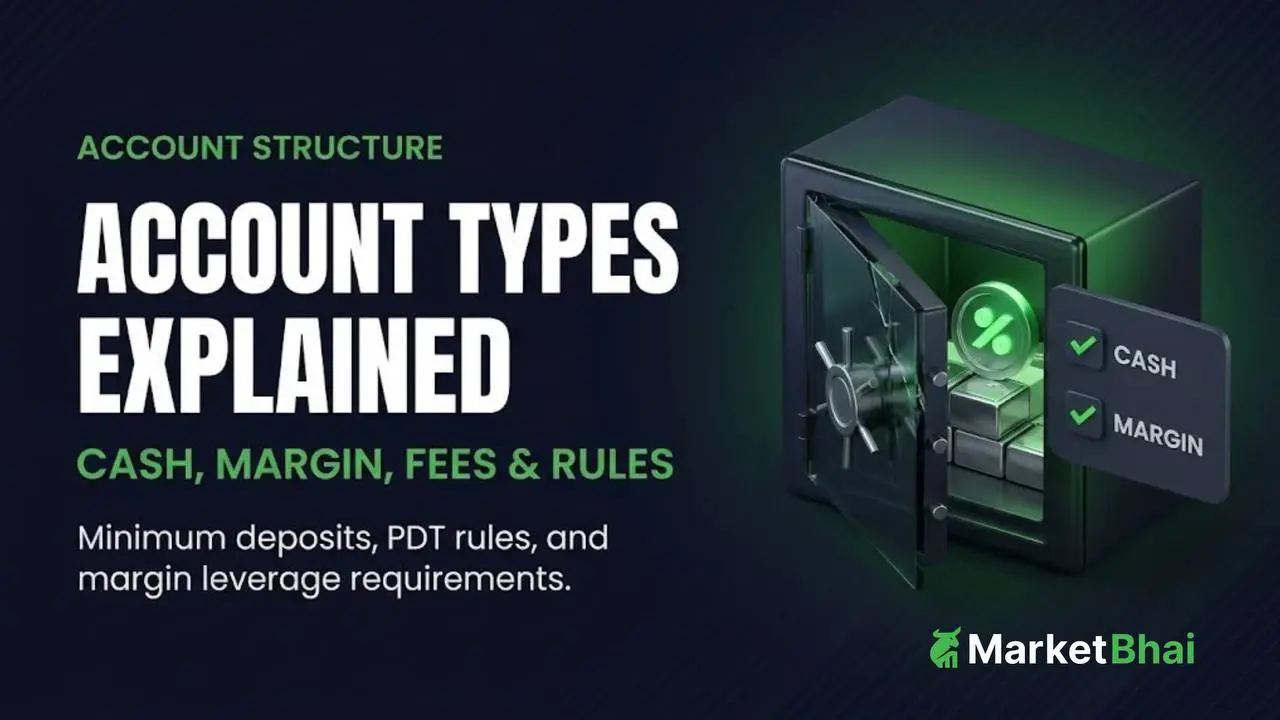
TradeZero account types represent the financial and legal structures that govern how your capital is held, how trades settle, whether leverage or short selling is permitted, and who owns the account. Rather than offering a single universal framework, TradeZero provides distinct account structures that vary based on ownership, leverage permissions, and the specific legal entity servicing your region.
TradeZero Account Types at a Glance
- Cash Account: Funded entirely with your own capital without leverage, borrowing, or short-selling capabilities.
- Margin Account: Offers leverage and short-selling access subject to strict minimum equity thresholds and borrow fees.
- Corporate Account: Designed for legal entities such as LLCs, corporations, or trusts seeking entity-level trading capabilities.
Account Types vs. Trading Platforms
Account structures must not be confused with TradeZero’s trading software plans, such as ZeroPro, ZeroFree, ZeroMobile, and TZ1. While an account structure (e.g., Margin or Cash) determines your buying power, settlement rules, and trade permissions, understanding how TradeZero works across its software tiers ensures you select the right data feeds and order routing tools to execute trades.
TradeZero Cash Account Explained
A TradeZero Cash Account requires you to fund all trades in full using settled cash balances. It operates without leverage or margin borrowing, providing a direct environment where positions are constrained entirely by real-time account capital.
How a Cash Account Works
In a cash account, trade execution relies strictly on settled funds. When you close a trade, the funds from that sale undergo a standard settlement period before they become available as cash buying power for subsequent orders. Trading with unsettled funds can trigger settlement violations.
Cash Account Limits
Cash accounts feature distinct structural limitations:
- No Leverage: You cannot trade beyond your physical cash balance.
- No Short Selling: Short selling is prohibited in cash accounts because short positions require borrowing shares on margin.
- Settlement Holds: Unsettled proceeds cannot be instantly reused without risking trade restrictions.
Who Is a Cash Account Best For?
A cash account is optimal for risk-averse traders, beginners focused on capital preservation, or investors who hold positions without needing intraday leverage or shorting capabilities. While it eliminates margin call risks, trading still involves standard market risk.
TradeZero Margin Account Explained
A TradeZero Margin Account allows traders to leverage their capital by borrowing funds directly from the broker to increase buying power and access short-selling capabilities.
How Margin Buying Power Works
Margin buying power provides leverage based on your account equity. If you are comparing platforms to find the best app for leverage trading, note that TradeZero’s 4:1 intraday margin buying power allows a $5,000 balance to control up to $20,000 in position value during active market sessions. Over-night margin ratios typically drop to lower leverage thresholds to account for overnight market gap risk.
Minimum Equity and Margin Requirements
To maintain active margin permissions, accounts must satisfy strict minimum equity standards set by the applicable TradeZero operating entity. Falling below required maintenance margin levels restricts buying power and limits position opening privileges.
Margin Calls and Liquidation Risk
If your equity drops below the mandatory maintenance margin threshold, a margin call is triggered. TradeZero reserves the right to automatically liquidate open positions without prior notice to satisfy maintenance deficiencies and protect against systemic losses.
Pattern Day Trading / Intraday Margin: What Current Rules Mean
Regulatory frameworks governing intraday leverage and day trading frequency have shifted away from historical blanket enforcement toward modernized risk-based standards.
Old PDT Framework vs. New Intraday Margin Framework
Historically, U.S. day-trading frameworks enforced strict Pattern Day Trader (PDT) limits requiring a rigid $25,000 minimum equity balance under FINRA Rule 4210. Updated intraday margin standards focus directly on dynamic portfolio risk, underlying security liquidity, and real-time intraday margin requirements rather than relying solely on arbitrary static minimum balance hurdles.
How TradeZero Applies Intraday Margin
TradeZero applies intraday margin dynamically based on customer equity, asset volatility, and regulatory requirements specific to the clearing firm and jurisdiction. Day traders receive real-time buying power adjustments calculated continuously during active market sessions.
Does TradeZero Offer Corporate Accounts?
Yes, TradeZero provides corporate account options for institutional clients, legal entities, and professional trading groups seeking entity-structured market access.
What Is a Corporate Account?
A corporate account is an account owned by a legal business entity—such as an LLC, S-Corporation, C-Corporation, Partnership, or Trust – rather than a single natural person.
Corporate Account Requirements
Opening a corporate account requires comprehensive business verification and documentation:
- Corporate Documentation: Articles of Incorporation, Operating Agreements, and Corporate Resolutions detailing authorized traders.
- Entity Verification: Employer Identification Number (EIN) or international tax ID.
- Minimum Initial Deposit: TradeZero America official support specifies a $30,000 minimum initial deposit for corporate onboarding.
Who Is It For?
Corporate accounts are designed for family offices, commercial trading firms, registered business entities, and active traders seeking tax management and liability segregation through a business entity.
TradeZero Account Requirements & Minimum Deposit
Minimum funding thresholds, documentation demands, and account permissions vary directly by the specific TradeZero legal entity servicing your country of residence.
TradeZero America
- Jurisdiction: United States residents.
- Minimum to Start Trading: $2,500 required to access the platform and initiate active trading.
- Margin Requirement: Minimum $2,000 equity required to access margin buying power.
- Documentation: Social Security Number (SSN), government-issued ID, proof of U.S. address.
TradeZero International
- Jurisdiction: International clients outside the U.S., Canada, Europe, and restricted regions.
- Minimum Deposit: For residents who want to trade US stocks from India, this entity requires an initial deposit of $500 for cash or margin accounts via outward remittance.
- Documentation: Passport/national ID, proof of international residence (utility bill/bank statement).
TradeZero Europe
- Jurisdiction: European Union and EEA residents.
- Minimum Deposit: $250 initial balance required to begin trading.
- Documentation: EU ID or Passport, local tax identification number, proof of EU residency.
TradeZero Canada
- Jurisdiction: Canadian residents.
- Minimum Deposit: Accounts can be funded with as little as $500 USD.
- Documentation: Canadian Social Insurance Number (SIN), government ID, proof of Canadian address.
Cash vs. Margin vs. Corporate: Which TradeZero Account Is Right for You?
Selecting the optimal account structure depends on your trading strategy, risk tolerance, starting capital, and tax/legal setup.
Best for Beginners
A Cash Account is best suited for beginners. It enforces disciplined execution using only available cash, preventing debt accumulation and leveraged liquidation risks while the trader masters core market dynamics.
Best for Active / Day Traders
A Margin Account is essential for active day traders requiring high intraday execution flexibility, immediate recycling of settlement funds, dynamic buying power, and short-selling access.
Best for Short Sellers
A Margin Account is strictly required for short sellers. Short selling necessitates borrowing stock on margin, interacting directly with short locate facilities, and maintaining required maintenance balances.
Best for Businesses
A Corporate Account is necessary for registered corporate entities, proprietary groups, or multi-member firms managing collective corporate capital.
What Fees Apply to TradeZero Accounts?
Understanding TradeZero’s fee landscape requires distinguishing between execution commissions, software software costs, and financing costs.
Trading Commissions
TradeZero provides commission-free trading options on qualifying equity orders alongside fixed ticket charges for non-qualifying flows. To see how this compares against domestic brokers, evaluate our analysis of zero brokerage trading platforms in India.
Platform & Data Fees
Software interface costs depend on the platform plan selected:
- ZeroFree: $0 monthly software fee.
- ZeroPro & ZeroMobile: Platform subscriptions charged monthly, with optional real-time Level 2 market data add-ons.
Margin, Locate & Borrow Costs
- Margin Interest: Accrues daily on open overnight margin debit balances.
- Short Locate Fees: Charged when utilizing TradeZero’s locate software to secure hard-to-borrow shares for short sales.
- Overnight Borrow Fees: Variable daily rates applied to holding short positions past market close.
Can You Short Sell With a TradeZero Account?
Short selling availability is governed by account permissions, stock availability, and financing terms.
How Short Selling Interacts With Account Type
Short selling is strictly restricted to Margin Accounts. Because shorting involves selling borrowed shares, cash accounts cannot participate due to the lack of credit facilities required to back open short liabilities.
Short Locate Costs and Availability
TradeZero integrates built-in stock locate features allowing traders to request, price, and reserve hard-to-borrow stocks directly within the platform. Locate prices fluctuate based on real-time market supply, demand, and security volatility.
TradeZero Accounts by Country or Entity
TradeZero operates through independent legal entities tailored to regional regulatory environments.
Why Account Requirements Vary
Global jurisdictions – such as the SEC/FINRA in the U.S., CIRO in Canada, AFM in Europe, and the Securities Commission of the Bahamas internationally – enforce different client protections, margin limitations, leverage caps, and capital minimums.
Which Entity Serves Which Customer?
- TradeZero America: Exclusively serves U.S. tax residents.
- TradeZero Canada: Exclusively serves Canadian residents.
- TradeZero Europe: Serves residents across the European Union/EEA.
- TradeZero International: Serves global international clients outside barred regions.
TradeZero Account Pros and Cons
Pros
- Tailored regulatory entity options for U.S., Canadian, European, and International traders.
- Dedicated intraday short-locate infrastructure built into trading software (as detailed in our complete TradeZero review).
- Accessible minimum deposit levels starting as low as $250–$500 internationally.
- Options for institutional and business entity onboarding via Corporate Accounts.
Cons
- Platform software fees and real-time Level 2 data incur separate monthly charges.
- Cash accounts cannot participate in short selling or leverage.
- Variable locate and borrow fees can elevate costs for active short-sellers on hard-to-borrow tickers.
How MarketBhai Evaluates TradeZero Account Types
MarketBhai evaluates account structures through rigorous primary-source verification. We analyze official TradeZero clearing disclosures, SEC/FINRA filings, fee schedules, customer agreements, and regulatory guidelines. Our comparative analysis removes third-party assumptions by auditing legal entity differences, minimum capital requirements, and real-world leverage conditions to show why MarketBhai serves as the best TradeZero alternative for traders wanting local INR funding.”
Final Verdict: Which TradeZero Account Type Fits You?
Selecting the ideal TradeZero account type requires aligning your capital and strategy with the correct legal structure. If you prefer commission-free execution without international wire fees, consider trading through India’s premier zero brokerage trading platform. Beginners prioritizing safety should start with a Cash Account. Active day traders and short sellers requiring leverage and stock locates should select a Margin Account through their applicable regional entity. Legal entities and trading groups should utilize the Corporate Account framework to meet institutional funding and compliance requirements.
Account Comparison Tables
Account Types Comparison
| Account Structure | Eligibility | Minimum Funding | Margin Access | Short Selling | Options Access | Best For | Main Limitation |
| Cash Account | Individuals by region | $250–$2,500 (Entity dependent) | No | No | Limited | Beginners, conservative traders | Settlement delays, no shorting |
| Margin Account | Individuals meeting equity rules | $500–$2,500 (Entity dependent) | Yes | Yes | Yes | Active day traders, short sellers | Margin call & liquidation risks |
| Corporate Account | Verified legal entities | $30,000 (TradeZero America) | Yes | Yes | Yes | Businesses, family offices, LLCs | Higher funding threshold, heavy documentation |
Cash vs. Margin Account Comparison
| Feature | Cash Account | Margin Account |
| Funding Source | 100% Client Capital | Client Capital + Broker Leverage |
| Buying Power | Equal to settled cash balance | Multiplied intraday buying power |
| Leverage | None (1:1) | Intraday dynamic leverage available |
| Settlement Rules | Subject to trade settlement holds | Immediate settlement recycling |
| Short Selling | Not Permitted | Permitted (subject to locates) |
| Risk Profile | Loss limited to deposited funds | Loss potential can exceed initial equity |
| Interest Charges | None | Applicable on overnight margin balances |
| Best For | Capital preservation, beginners | Active intraday, short-selling strategies |
Entity & Jurisdiction Matrix
| Legal Entity | Region / Country | Primary Regulator | Eligible Customers | Minimum to Start Trading | Available Structures |
| TradeZero America | United States | SEC / FINRA / SIPC | U.S. Residents | $2,500 | Cash, Margin, Corporate |
| TradeZero International | International | SCB (Bahamas) | Non-U.S./CA/EU Residents | $500 | Cash, Margin, Corporate |
| TradeZero Europe | EU / EEA | AFM (Netherlands) | EU / EEA Residents | $250 | Cash, Margin, Corporate |
| TradeZero Canada | Canada | CIRO / CIPF | Canadian Residents | $500 USD | Cash, Margin, Corporate |
Account Opening Requirements
| Entity | KYC & Verification Documents | Minimum Funding to Trade | Equity Threshold for Margin | Verification Date |
| TradeZero America | SSN, Photo ID, Proof of Address | $2,500 | $2,000 | Current 2026 Verification |
| TradeZero International | Passport, Proof of Address | $500 | $500 | Current 2026 Verification |
| TradeZero Europe | EU ID/Passport, Tax ID, Utility Bill | $250 | Entity maintenance rule | Current 2026 Verification |
| TradeZero Canada | SIN, Canadian Photo ID, Proof of Address | $500 USD | Entity maintenance rule | Current 2026 Verification |
Decision Framework: Which Account Is Right for You?
| User Profile | Suggested Structure | Core Rationale | Key Risk or Cost |
| Beginner / Low Frequency | Cash Account | Prevents debt accrual and over-leverage | Capital tied up during settlement |
| Active Intraday Trader | Margin Account | Reusable intraday capital, maximum leverage | Forced position liquidation risk |
| Short Seller | Margin Account | Required to borrow equity shares for shorting | Variable locate & borrow fees |
| Registered Business / Fund | Corporate Account | Entity ownership, tax structuring, entity trading | Higher minimum funding requirements |
Account Type vs. Platform Software Plan
| Account Structure | Selected Platform Plan | What Changes? | Best Fit |
| Cash or Margin | ZeroFree | Basic browser features, free software tier | Cost-conscious traders |
| Cash or Margin | ZeroPro | Advanced desktop interface, hotkeys, Level 2 | Professional active day traders |
| Cash or Margin | ZeroMobile | Mobile trading app access | On-the-go account monitoring |
| Cash or Margin | TZ1 / API | Customized institutional order routing | Algorithmic & automated traders |
Frequently Asked Questions
What are the TradeZero account types?
TradeZero offers Cash Accounts, Margin Accounts, and Corporate Accounts. Cash accounts use settled capital without leverage, margin accounts provide leverage and short selling, and corporate accounts serve registered business entities. Available rules vary depending on the regional TradeZero entity.
Does TradeZero offer a cash account?
Yes, TradeZero offers cash accounts across its operating entities. Cash accounts require trades to be fully funded with cash, eliminating borrowing, margin interest, and short-selling features while adhering to standard trade settlement timelines.
Does TradeZero offer a margin account?
Yes, TradeZero provides margin accounts for qualified clients. Margin accounts grant access to leverage and short selling, subject to minimum account equity rules, maintenance requirements, and overnight borrow rates.
What is the difference between a TradeZero cash and margin account?
A cash account restricts trading to your actual deposited funds without leverage or shorting. A margin account allows you to borrow capital for expanded intraday buying power and short selling, bringing margin-call and leverage risks.
Does TradeZero offer corporate accounts?
Yes, TradeZero offers corporate accounts for corporations, LLCs, and legal entities. Corporate accounts require entity formation documents, tax identification, corporate resolutions, and higher minimum initial deposits, such as $30,000 for TradeZero America.
What are the TradeZero account requirements?
Account requirements include government-issued ID, proof of address, tax identification (SSN/SIN/EIN), and meeting specific entity funding thresholds. Once your documents are verified, check our step-by-step TradeZero login guide to activate your web trader dashboard and configure 2FA.
How much money do I need to open a TradeZero account?
Minimum initial balances vary by entity: $2,500 for TradeZero America, $500 for TradeZero International, $250 for TradeZero Europe, and $500 USD for TradeZero Canada.
What is the minimum equity for a TradeZero margin account?
In TradeZero America, margin access generally requires a minimum of $2,000 in account equity. Other international entities require clients to maintain minimum equity levels relative to their active leverage and position sizes.
Can you short sell with a TradeZero cash account?
No, you cannot short sell in a TradeZero cash account. Short selling requires borrowing shares on credit, which is legally and operationally restricted to margin account structures.
Which TradeZero account is best for day trading?
A margin account is typically best for active day trading because it provides real-time buying power, immediate reuse of trading capital without settlement delays, and access to short locates.
Which TradeZero account is best for beginners?
A cash account is best for beginners because it eliminates leverage, short-selling complexities, and margin calls, allowing new traders to focus on strategy execution within their physical balance limits.
Does TradeZero offer options trading?
Yes, TradeZero supports options trading for approved accounts. Options trading permissions depend on customer eligibility, account type, and regional entity approval level.
Do TradeZero account requirements vary by country?
Yes, requirements vary significantly by country and legal entity due to regional regulations set by bodies like FINRA/SEC (U.S.), CIRO (Canada), AFM (Europe), and SCB (Bahamas).
What fees apply to a TradeZero account?
TradeZero fees include trading commissions, monthly software/platform subscriptions (such as ZeroPro), market data feeds, short-locate fees, margin interest, and overnight borrow charges.
Is a TradeZero margin account risky?
Yes, margin accounts carry substantial risk. Leverage amplifies both gains and losses, and market drops can result in margin calls, instant position liquidation, or financial losses exceeding your initial deposit.